Wednesday, April 20, 2016

Decision Time for Those Who Are Feeling the Bern

Is this a movement, or a campaign?
What happens on Wednesday will tell us if Sanders supporters are in this for the long haul, or just along for the ride.


I’m voting for Bernie.  He stands for most of the things I’ve stood for my whole life. A foreign policy that respects other countries. Domestic policies that put the poor and working class first. Addressing climate change with the urgency that this aching planet demands. He is demonstrably the candidate who understands these issues best and has the commitment to address them. Whether that means he would make the best President is an open question, but I’m voting for him on the issues.
If Bernie doesn’t win  (and there is, no one can argue, at least a 50/50 chance that he won’t), his supporters have a choice to make. We can howl that the process is rigged (pointless), we can vilify Clinton as a Wall Street lackey (yawn), or we can act as if we actually believe the words and the example of Bernie Sanders.
I’m not talking only about the Bernie Sanders who enchants with his straight talk, who pals around with Pope Francis, who charms tiny sparrows. I’m talking about the Bernie Sanders who has spent a lifetime as part of a movement for social justice, a pursuit that has always been secondary to his personal political aspirations.
The choice for Sanders’ supporters will be whether they can transform the organization and the energy of the campaign into a lasting movement. It will be about whether the Sanders’ followers, often criticized for being too young and too idealistic, can show the Democratic establishment and the rest of the country, that we are serious about radical change. We have to decide if we are in this to feel good, or to do good. We also have to make sure that those in our ranks understand that we will be paying for the changes we hope to bring about – no small task.
Real change, as Sanders points out relentlessly, can only begin when we remove money from its central role in our politics. Sanders’ campaign, funded by folks with twenty-seven dollars to spare, just might propel him to the White House. If it does not, it must unite behind the Clinton candidacy from now until November, and come January be prepared to push her to uphold the campaign promises that Bernie has forced her to make.

That has to begin with vigorous support for grassroots efforts to promote public financing for campaigns. No one has articulated this more clearly than Sanders. It is the key to returning power to the people and not just the people who can afford it. Overturn Citizens United. Banish the notion that corporations are people. Provide public financing for campaigns, and let ideas, not fund raising power, lead our public discourse.
This should be the first course of action for a Sanders’ Presidency, or the first challenge that the Sanders’ movement lays at the feet of a President Clinton. Sanders has laid the groundwork for a movement that combines support for progressive causes, and support for progressive candidates with a fundraising power that can rival a Super Pac. Imagine a movement sweeping into key Congressional districts and swing states to turn out voters and flip some key Congressional seats this fall. Imagine what that movement could do in 2018 with a similar strategy. Let’s call it a People’s PAC.
Can Sanders’ supporters make this adjustment? Presidential candidates have tried to convert their campaigns into movements before. Jesse Jackson’s Rainbow Coalition comes to mind; President Obama’s Organizing for America group was somehow supposed to keep the grassroots involved even as their man sat in the Oval Office. Usually they end up as top down entities serving their leadership, and they peter out or lose relevance.
Many of the Sander’s troops seem to so enjoy vilifying Clinton that it makes unity seem unlikely. But a united Democratic Party this fall could open the door to progressive changes no one was was even talking about before the Sanders surge. A mature movement would recognize its victory even while conceding the failure of their Presidential campaign.
Clinton devotees must recognize that they will not win over the Sanders’ voters by simply noting that she is the lesser of two (or more) evils. We have heard that lullaby too many times. They must fully recognize that Bernie’s brigade not only rejects the triangulation politics that made the Clintons so successful in the 90’s, but that they are speaking to the concerns of a new generation.

A friend of mine who loves Bernie posed a common complaint – he just doesn’t trust Clinton. I thought that was a good first step. We should not trust any politician to do anything other than what we have to power to make them do. Barack Obama in meeting with a group of environmentalists early in his first term was reported to have quoted FDR to them. “I agree with you. Now make me do it.”

If Hillary Clinton is our next President, Bernie Sander’s aroused following don’t have to like her or trust her. As Sanders has made clear, his political revolution is not solely about deciding who sits in the Oval Office. It really is about mobilizing the millions who have rallied to his cause, and then continuing to organize pressure that will keep a progressive agenda on track.


Saturday, June 27, 2015

David's Law Sanity 012815

LAWMAKERS IN ALBANY NEED DAVID’S LAW
by Ed Griffin-Nolan - Wednesday, January 28th, 2015
(This may or may not be an exclusive)
A lawyer friend of mine says that whenever a law is named for someone, you can pretty much figure that it’s a bad law.
I generally agree with my friend the attorney, but after the indictment of Assembly Speaker Sheldon Silver, I’m willing to make an exception this time and offer the following suggestion: The New York State Legislature, or at least the unindicted remnant of its members, should pass David’s law, named in honor of Oneida’s own Sen. David Valesky, a six-term Democrat who belongs to the Independent Democratic Conference, a tiny band of legislators who have hopes of being the swing votes in the state Senate and pushing a reform agenda.
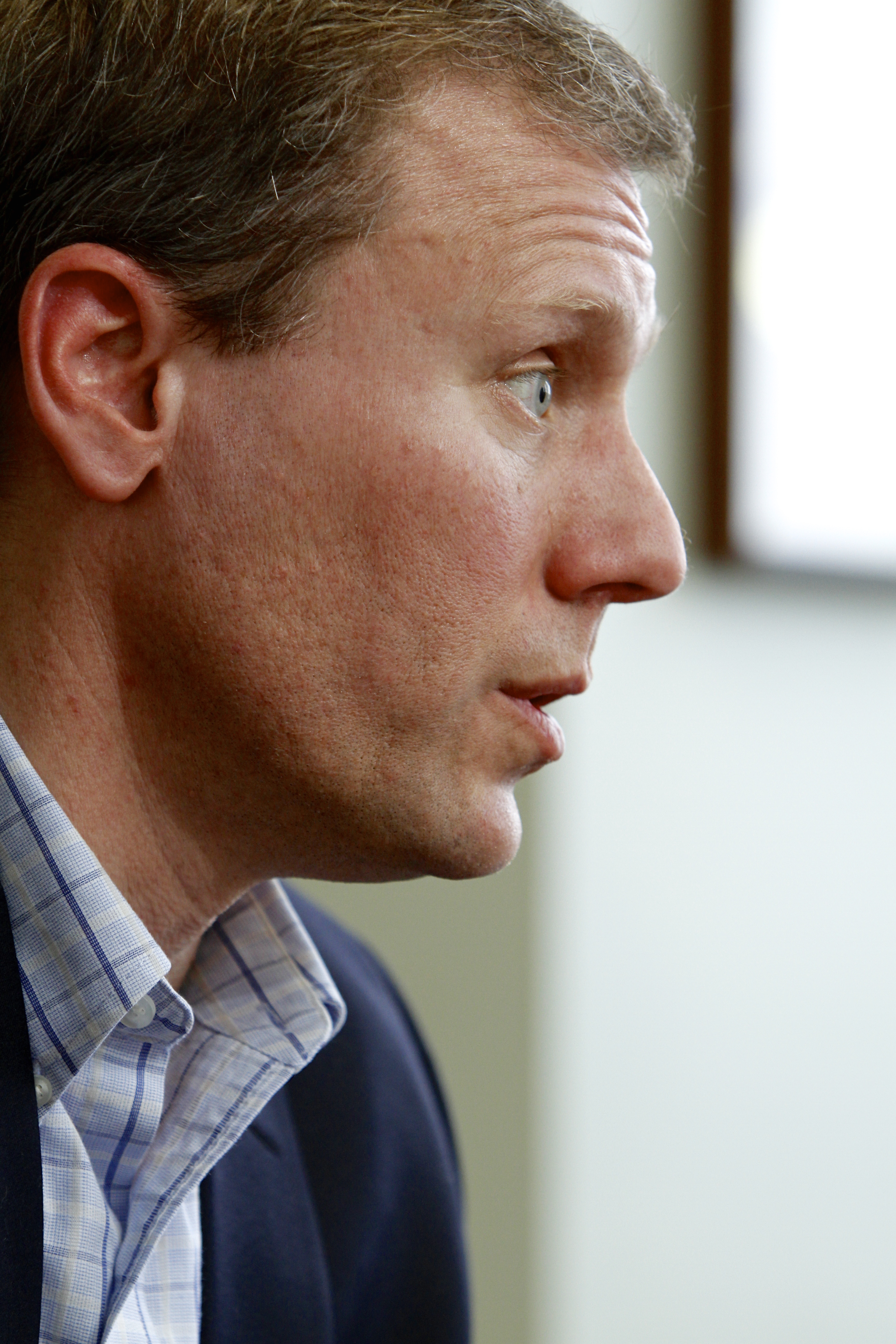
Sen. Dave Valesky Michael Davis Photo | Syracuse New Times
Sen. Dave Valesky
Michael Davis Photo | Syracuse New Times
Valesky is unashamed to admit in public, and to verify in writing on his financial disclosure forms, that he moonlights as the accompanist playing the organ at the Catholic church where he grew up and where his family attends Mass most Sundays. The disclosure forms say he is paid less than $5,000 for this service, but the senator himself once told me the exact amount is $500. (This may or may not be an exclusive.)
In the wake of the allegations that Silver collected millions of dollars in bribes disguised as legal work, it seems evident to me that the time has come to finally force our legislators to do the job we hired them to do and to knock off this moonlighting.
Legislating and serving one’s constituents is a full-time job, and it should be treated as such. Gov. Andrew Cuomo, in his State of the State speech one day before the Silver bombshell, seemed to acknowledge as much. The governor suggested a pay cut for any legislator who moonlights.
In this space, you have been hearing for years a simpler and more radical proposal:  In exchange for the privilege of representing us (and the ample salary and perks we bestow upon them), our state legislators should be mandated to forego outside income.
Except that would deprive the good people of St. Patrick’s parish in Oneida of the valued services of Mr. Valesky. Not wishing to force a sanctuary filled with worshippers to sing a cappella, let us adopt the following compromise: No one in the Assembly or Senate is allowed to earn more outside income than Dave Valesky. If the parish gives him a raise, the whole Albany bunch can up their take by just as much.
In the meantime, let’s remind them: They work for us, and not the other way around.

Je Suis Abdullah?

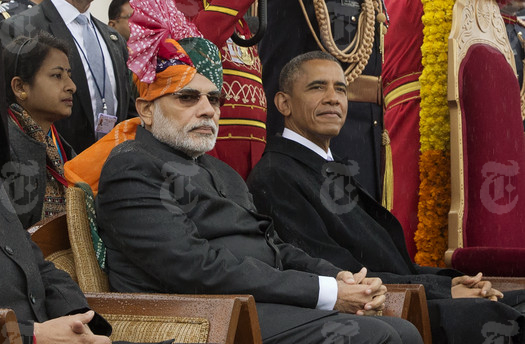
President Barack Obama and Indian Prime Minister Narenda Modi watch a parade and award ceremony during India's Republic Day celebration in New Delhi on Jan. 26.
President Barack Obama and Indian Prime Minister Narenda Modi watch a parade and award ceremony during India’s Republic Day celebration in New Delhi on Jan. 26.
President Barack Obama, who skipped the Paris march of world leaders in support of freedom of expression after the Charlie Hebdo massacre by Islamic extremists, cut short his stay in India to pay his respects to the deceased king of Saudi Arabia, where blogger Raif Badawi has been publicly caned for publishing views challenging the Islamic extremists who run his country.
Obama’s obsequiousness to the Saudi kingdom (which, lest we forget, was home to 15 of the 19 men who attacked us on Sept. 11, 2011) is consistent with long-standing U.S. policy of ignoring the kingdom’s discrimination against women, lack of due process and its theocratic worldview while peddling armaments to the Saudis to the tune of nearly $86 billion over the past five years. That’s billion, with a “B.”

Gangster Oilmen

“Abdullah presided over one of the world’s most wicked nonpariah states, whose domestic policies are almost cartoonishly repressive and whose international influence has been strikingly malign. His dynasty is founded on gangsterish control over a precious natural resource, sustained by an unholy alliance with a most cruel interpretation of Islam and protected by the United States and its allies out of fear of worse alternatives if it fell.”
— Russ Douthat, columnist, New York Times
*

Micere Mugo Sanity 041515

MICERE MUGO’S TIRELESS PURSUIT
by Ed Griffin-Nolan - Wednesday, April 15th, 2015
Professor Mugo has served on the faculty of the African American studies Department at SU


Can you imagine a Syracuse without Micere Githae Mugo? Can you imagine if a giant walked in our midst, so quietly that we did not know it?
Micere Mugo’s many friends and colleagues gathered at Syracuse University on April 2 and 3 to paint a picture of a career and a life that has caused ripples to roll across generations and institutions and disciplines. She was honored as a playwright, literary critic, and a social and political activist who challenged colonial and neocolonial rule in Africa as bravely as she challenged racism here in Syracuse and around the United States. And she was saluted as a kind friend, an auntie and a tireless mother for the many younger women she brought under her wing.
For 22 years Mugo has served on the faculty of the African American Studies Department at SU. It is not enough to call her work interdisciplinary. In her writing and scholarship she shreds the lines between disciplines, nor is she bound by any line between academia and activism. She has been an adviser, a mentor, an activist, a role model, and, beginning as a young woman in East Africa, a pioneer in national liberation struggles and campaigner for human rights.
She has built a reputation based on hard work and relationships with students, colleagues and friends who were once strangers. When you meet her it is hard not to feel that you are in the presence of royalty, if royal status were not hereditary but instead earned by selfless service. “Can you imagine?” she would say.
Late last year word started to filter out from the SU Hill that Mugo would be retiring at the end of the spring semester, pushed by nagging health issues and pulled by a desire to spend more of her time in her native Kenya. Supporters across campus mobilized to prepare a proper tribute.
Then word spread to other campuses, here in the United States, then in Europe and the United Kingdom, and back home to Africa. By the time the event kicked off on April 2, 30 different university and community institutions and organizations were lined up to sponsor, dozens of academics competed for a chance to speak, artists and writers clamored to perform in her honor.
Micere Mugo
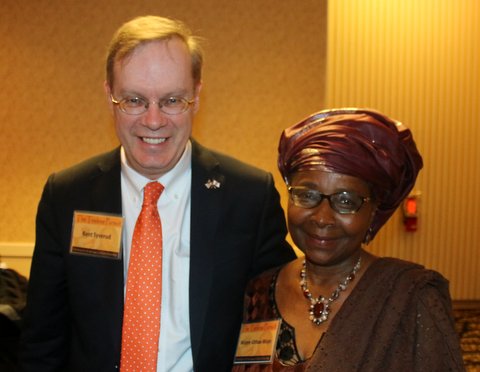
SU Chancellor Kent Syverud and Micere Mugo
Mugo’s celebration brought back former chancellor and good friend Nancy Cantor to the SU Hill for what may have been her first appearance since she left town a year ago. The tribute included music from the James Gordon Williams Trio (which includes bass player Bill Horrace, whose day job is chair of the Economics Department at SU), dance from several student and community groups, and readings from poets from Syracuse and around the world.
You would never think when listening to her gentle voice that the slight woman (as one participant put it, “rocking the African headdress”) had lived through exile, incarceration and threats in Kenya and abroad as a result of speaking against the dictatorship that ruled her country after independence. One play she wrote along with her Kenyan colleague Ngugi wa Thiong’o, entitled The Trial of Dedan Kimathi, a Mau Mau independence fighter, is considered a classic of political drama 40 years after it was first produced.
Mugo was lauded as a teacher and a mentor, a poet and a playwright, but also as an “auntie” to so many women, and a surrogate mom to many more. She was remembered as one who could gently prod her colleagues or her students to take risks and work harder.
The symposium in her honor was entitled “Tireless Pursuit” and the theme of Mugo’s seemingly boundless energy was raised again and again. She helped found the local organization United Women of Africa, the Ghana Society of Central New York, and the Pan African Community of Central New York.
Dean Diane Lyden Murphy said that Micere Mugo possesses “a moral compass for knowing the right thing to do and a talent for inspiring others to follow — gently.” Willy Munyoki Mutunga, who serves as the chief justice of Kenya’s Supreme Court, made the journey from Nairobi to Syracuse to discuss the topic, “Micere as the Mother of Feminist Masculinity.” He recounted a time in the 1970s when Mugo, then the mother of two small girls, was appointed the first female dean of a college at the University of Nairobi. In a meeting with her colleagues, he recalled, she began by mentioning that she had a question for her male counterparts: “Do you cook? Do you do your laundry? Do you change the nappies on your children?” She made her point.
Feature photo: Micere Mugo (left) with Linda Carty, professor in the African/African-American Studies Department  at Syracuse University. Alejandro Garcia photo.

Earth Day 2015 Sanity

CLIMATE CHANGES EARTH DAY PERSPECTIVE
by Ed Griffin-Nolan - Wednesday, April 22nd, 2015
What do we do to try to diminish our impact on global climate change?
Global warming should have a YouTube account. It should threaten beheadings, claim religious justification for its actions, and recruit a handful of our young ones to its cause. Then maybe we would start to fear it as much as we should.
Well, it worked for ISIS. The latest Middle Eastern terrorist boogey men, now in retreat across Iraq, certainly caught our attention. ISIS has managed to make us willing to expend all manner of national treasure, prestige and energy in the battle to exterminate them. Climate change that threatens our way of life? Not so much.
HomeUnderwaterWhile our behavior inexorably melts the glaciers, swamps our shorelines and multiplies the number of crazy weather events each year, it is the relatively remote but prominently publicized terrorist threat that has been the driving force for so many of our national policies. The terrorists have been able to harness the awesome power of fear, while the environmentalists cling tenaciously to a belief in the power of reason.
No contest.
If ISIS is Fox News, climate change is CNN. Or C-SPAN. Climate change moves too slowly, the science is too complicated, and there are too many parties too heavily invested in the status quo. It doesn’t help that the face most commonly associated with the cause is Al Gore, who seems too easy a target for mockery.
Even when climate change occasionally rears its head in a nasty way, as was the case with Hurricane Sandy, deniers were quick to dispute the links between our impact on the climate and its revenge upon us.
Think about it: There are no ISIS deniers, are there? In history’s rearview mirror, we will long have forgotten ISIS and Al Qaida, when we are trying to mop up from our failure to know which threats we should truly fear. But we hear no debate about whether ISIS is a threat.
What do we do to try to diminish our impact on global climate change? We shout up the stairs for the kids to turn out the lights, which is the modern equivalent of telling kids to clean their plates because children are starving in Africa. We recycle. We insulate.
One weekend a year we strap on rubber gloves and stalk the shoulders of our highways filling plastic bags with crap that passing drivers have carelessly thrown out their windows. Spring cleanups are great for building community, but they only remedy the actions of bad neighbors, not the mega damage we’ve done to our planet’s atmosphere.
Our newbie in Congress, John Katko, has made a high priority of fighting the terrorist threat. He is on a task force Congress created to keep us safe from the threat of homegrown fighters. All well and good. On his website, Katko has a list of 12 issues. Climate change is not one of them.
President Obama, in his 2015 State of the Union address, finally decided to level with us, calling climate change (not terrorism) “the greatest threat to future generations.” Note that Obama’s epiphany came after his party’s last electoral contest on his watch.
Climate change is a real threat. But we don’t get warned about it, don’t get asked to stay up all night and fret about it. No one gets frisked on their way out of Walmart to determine the carbon footprint of their purchases.
There’s no percentage in it for a politician, because the problem is us. No politician wants to face telling us the truth about our consumption and our propensity for waste. If you take an issue like a tax on carbon, even a revenue-neutral version that would distribute the proceeds to the people, there isn’t even a discussion.
The operative response from the vast majority of Republicans is to reject environmental concerns as job killers and denounce regulation as assaults on freedom. We need to remind them how tough it will be to find work and celebrate freedom when our coastline is submerged.

Say Yes Still a Good Idea - 050615

SAY YES: STILL A GOOD IDEA
by Ed Griffin-Nolan - Wednesday, May 6th, 2015
What we need now is a recommitment to Say Yes
(Read Part 1 – CLICK HERE)
If we could see before and after pictures of the streets of Baltimore that were the scene of (first and foremost) peaceful protests and then (when the cameras were rolling) violence and looting, the contrast would be easy to describe. A very poor neighborhood just got poorer.
It wasn’t just about the police and how they treated Freddie Gray. People much closer to the scene than you or me have observed that the anger that took over the streets of Baltimore has been percolating for a long time. The killing of Gray was the match that lit the fuse for days of street fighting and looting. Say what you want about the choices made by individuals, the social context is inescapable: The anger is fueled by poverty and lack of opportunity.
Maryland is the wealthiest state in the nation, and yet in her greatest city, Baltimore, more than a quarter of the people live in poverty. According to the Census Bureau, in 2013, Baltimore ranked 131st among U.S. cities in terms of the percentage of people living below the poverty line.
Syracuse? We were No. 23, and that was a big improvement over the previous year. Fully a third of Syracusans are poor.
In Baltimore, 68 percent of high school students graduate in four years. In Syracuse, our graduation rate is slowly improving, but still barely more than half graduate on time: 51.1 percent graduate in June, a figure that increases to 56.8 percent by August. Truth is, we aren’t doing as well as Baltimore in either education or dealing with poverty. So when people wonder if it can happen here, I think that the real question is: When will it happen here?
When poverty, crime and hopelessness collide, two groups of people are always at that intersection: teachers and the police. It’s easy to blame the police, and if the charges leveled by Baltimore prosecutor Marilyn Mosby hold up, they should be blamed for Freddie Gray’s death. But they can’t be blamed for an economy that leaves too many city people without hope, without opportunity.
Whenever the discussion turns to opportunity, we have to talk about education. Eliminating barriers to graduating from high school and helping more urban youth get to college and succeed: That’s a surefire way to help families, neighborhoods and cities climb out of poverty. What we like to do instead is to blame the teachers for failed schools and the cops for dangerous streets.
City of Syracuse Mayor Stephanie Miner, Onondaga County Executive Joanie Mahoney and then-Syracuse University Chancellor Nancy Cantor all endorsed Say Yes to Education because it offered scholarships as an incentive for our kids to finish school plus the social supports needed for those kids to make it.
We have allowed the simple promise of Say Yes to get swallowed in what starts to sound, in the face of such an enormous need, like petty bickering. Teachers have never been fully on board with Say Yes because they were not invited to help shape it and instead perceive it as an imposition from outside. Parents, administrators and outside experts have criticized the after-school programs for kids as uneven, poorly planned, and sometimes unproductive. And frankly, teachers battered by state mandates and violence in their own classrooms and hallways can’t be blamed for operating in survival mode.
But, as Say Yes national president Mary Anne Schmitt-Carey points out, Onondaga County has taken on a much larger role in providing health and social services to needy kids as a result of collaboration with the Syracuse school district. All of the Say Yes supports are now locally owned and driven, and Schmitt-Carey’s organization recommitted last week to backing the scholarships. We can’t let that promise fade.
One reason Say Yes inspired so much hope in 2008 was that it brought together the city, the school district, the county, the university, and private partners to work together on behalf of our kids. What we need now is a recommitment from all those partners. We’ve seen too many good ideas drown in our own pessimism. From the mayor, from the Central New York Community Foundation, from the superintendent on down, we need to hear an affirmation of Say Yes. The alternative is too harsh to bear.

Toby Shelley's Conservative Context 061015

TOBY SHELLEY’S CONSERVATIVE CONTEXT
by Ed Griffin-Nolan - Wednesday, June 10th, 2015
Toby Shelley will be running to hold office next fall against Joanie Mahoney.
Syracuse New Times editor-in-chief Larry Dietrich has one general rule about covering political contests. Larry’s Law goes like this: “Nobody pays attention to politics until Labor Day.”
He’s got a good point. We just emerged from a brutal winter. Downtown, people are sitting outdoors at sidewalk tables sipping a pint, jamming festivals and road races and, best of all, feasting on fresh local strawberries sent from Baldwinsville to drive those hard, tasteless California berries from the shelves.
We could be tempted not to care. If you listen to national media following the alleged presidential pursuits of Lincoln Chafee and George Pataki (yes, George Pataki) and more than a dozen others, the notion of a Larry’s Law prohibiting perpetual campaign reporting starts to sound better every day. Outdoors in the sunshine, it gets hard to remember just why we are supposed to care about who will hold office next fall.
Honoring the wisdom of Larry’s Law by making an exception, I wrote last week about the unusual alliances shaping up in this fall’s county executive race. Incumbent Republican Joanie Mahoney finds herself with plenty of support from traditional Democratic allies in the city, especially among African- American organizations, while the Dems struggle to find someone to oppose her. (She won her second term running unopposed in 2011.)
Then from the shores of Otisco Lake comes Toby Shelley, retired Onondaga County Sheriff’s Department sergeant, military veteran, part-time cop and farmer. Shelley, who lost his bid to be sheriff in 2014, says that he is running to give the people a choice. During his time in the military, which included a stint in Iraq, Shelley says he was fighting “for democracy, not autocracy” and it irks him when a politician gets a free pass on Election Day.
Shelley says he wasn’t looking to run. He was recruited for the post by his friends in the Conservative Party. He has the endorsement of the Democratic Committee and, if no primary foe emerges, he will be on both lines in the fall. Shelley believes the race is winnable. “The Conservatives recruited me. I think there should be enough votes on the Conservative line to win.”
Asked about that odd alliance, he asserts that Central New Yorkers are “mostly moderate people in the center. Conservatives and Democrats may be different, but if you agree with the Constitution and paying your bills, then we agree.”
Mahoney last week attacked the Democrats for supporting a candidate who would run on the Conservative line, noting that the Conservative platform, among other things, endorses profiling and stop-and-frisk as police tactics. Shelley says he hasn’t seen that in the Conservative platform. He should check the website, where support of profiling is right there next to support for hydrofracking and opposition to gun control.
When it comes to policing, Shelley said at first that you can’t profile people based on race. “You can’t stop someone just based on their appearance. There has to be a criminal activity afoot, and they have to meet the description of the suspect.” The former candidate for sheriff then volunteered that, based on his experience in law enforcement, context was important.
Speaking from his farm overlooking Otisco Lake, Shelley said that, “For example, out in Marcellus, a community that is mostly Caucasian, if you see someone who looks different, you might just stop and talk to them, ask how they’re doing.”
Hmmm … Ask how they’re doing? That’s what he said. How is that different from stopping someone based on his appearance? If a cop sees a black person in an area where mostly white people live (even when there is no criminal activity afoot), that should raise concern?
It seems perfectly reasonable to the Democratic candidate for county executive, a man who last year ran for sheriff. Seems to me that stopping someone on the basis of skin color is the textbook definition of racial profiling.
In Toby Shelley’s world, being out in the county while black is grounds for being stopped by a cop. Small wonder that the city’s African-American political leadership is lining up behind Mahoney.
Speaking of summer, this season Sanity Fair will appear in the Syracuse New Times every other week, alternating with Jeff Kramer. And no more campaign politics ‘till Labor Day. That’s a promise.

Mahoney Blurred Lines Sanity 060315

http://www.syracusenewtimes.com/blurred-lines/

BLURRED LINES
by Ed Griffin-Nolan - Wednesday, June 3rd, 2015
After Onondaga County Executive Joanie Mahoney received the endorsement of the Alliance Network, a city-based African-American advocacy group, she was grateful. But she also thought to herself, “They’re not asking enough.”
In his May 20 endorsement press conference, held at the Dunbar Center on South State Street, South Side power broker Walt Dixie — leader of the Alliance Network, which is affiliated with the Rev. Al Sharpton — mentioned two reasons his group likes Mahoney over Democrat/Conservative Toby Shelley. One had to do with improvements in how the jail is treating people, and another had to do with streamlining public assistance appointments.
“Really?” Mahoney recalls thinking. Is that the best we can do? Is that all they are asking? A county leader can earn the endorsement of a black activist group twice just because her administration treats their people better when they become prisoners or paupers?
It’s time, says Mahoney, to raise the bar of expectations. And Dixie, along with others in the community, seems to be buying her brand of hope and change.
Mahoney says that if she is given another four years at the helm of the county, she wants to take a crack at doing much more for the urban core. “I want to bring back the black middle class,” she told me the day after the Alliance Network gave her its blessing. Bold words and not what you might expect from a Republican leader, but Mahoney is no stranger to unusual alliances.
She’s tight with Democratic Gov. Andrew Cuomo and is barely on speaking terms with local Republican boss Tom Dadey. Rural and suburban Republicans in the County Legislature regularly challenge her initiatives. Frequently those points of contention, from Save the Rain to Say Yes to Education to the sales tax formula, come when she advocates for city issues at the county level.
Dixie calls her a maverick. Others see opportunism. Mahoney says it’s personal.
The reigning county executive explains that she is, at heart, a city kid. She grew up on the edge of Upper Onondaga Park. She and her husband, Mark Overdyk, graduated from Corcoran High School. When she attends reunions of her Class of 1983, or her husband’s Class of 1981, she’s struck by the number of their African-American classmates who have gone on to professional careers and fled Syracuse for Charlotte or Atlanta or other Southern cities.
They migrate in search of jobs, but also, when they get talking about it, to escape this city with its persistent and soul-numbing segregation. That segregation, she says, weighs on her even after she moved her family out to the ’burbs.
Can a white Republican leader of a county reverse the trend of black flight from our town? She’s laid out a difficult challenge and is using language that makes many people uncomfortable. She echoes the charge made by others in her party that the Democrats have taken African-American votes for granted. In Syracuse, she argues, African-Americans have helped elect Democrats to every major office and have very little to show for it. Dixie echoes the same sentiment.
Mahoney bristles when she points out that Democrats have chosen a candidate to oppose her, Toby Shelley, who is running on the Conservative line. The Conservative party platform includes an endorsement of such police tactics as Stop and Frisk and profiling. She anticipates that Shelley would say that he doesn’t agree with everything in the Conservative platform. He does, and more. Next week we’ll hear what Shelley has to say about his race to replace Mahoney.